
Category: Uncategorized

  • How Much House Can You Afford in the Central Valley? A 2026 Buyer’s Guide for Modesto, Turlock, and Stanislaus County

    Jesse Santana reviews a homebuyer budget in a bright Central Valley home

    “How much house can I afford?” The short answer depends on four things: your income, monthly debts, down payment, and the full monthly cost of owning the home, not just the mortgage payment.

    You’ll see the 28/36 guideline quoted everywhere: housing costs near 28% of gross monthly income and all monthly debts near 36%. Treat that as a budgeting rule of thumb, not as the ceiling on what you can borrow. It is old guidance, and real loan approvals run well above it. What actually matters is the debt-to-income ratio (DTI) a lender will accept for your situation, and separately, the payment you’re comfortable carrying.

    What four numbers should I know first?

    Before browsing listings in Modesto, Turlock, Riverbank, or elsewhere in the Central Valley, gather these four inputs:

    1. Gross monthly income: Income before taxes, including income that may qualify from a co-borrower.
    2. Monthly debt payments: Such as car loans, student loans, credit cards, and personal loans.
    3. Down payment and available funds: Include money for closing costs and keep an emergency cushion in mind.
    4. Full monthly housing cost: Principal and interest, property taxes, homeowners insurance, mortgage insurance if applicable, and any homeowners association (HOA) dues.

    The fourth number matters because a home’s purchase price alone doesn’t tell you what it will cost each month. Two homes at the same price can have different monthly costs if their taxes, insurance, or HOA dues differ.

    What debt-to-income ratio can I actually get approved at?

    Two ratios matter. The front-end ratio is your housing payment divided by gross monthly income. The back-end ratio, usually just called DTI, is all your monthly debt payments including housing, divided by gross monthly income. Lenders look hardest at the back-end number.

    Here’s the real range, which is a lot wider than the 28/36 crowd will tell you. Conventional loans with strong credit, documented income, and money left in reserves are commonly approved in the mid-40s and reach 49% or 50%. FHA maxes out at 47/56, meaning a 47% front-end and a 56% back-end, once automated underwriting approves the file and the compensating factors hold up. VA has no hard DTI cap at all: it can run into the 60s as long as the loan meets VA’s residual income and minimum disposable income requirements for the region and family size. Those aren’t theoretical numbers, they’re what files get approved at.

    Loan type Starting guideline Maximum approval range
    Conventional 28/36 Mid-40s routinely; 49-50% back-end with reserves and compensating factors
    FHA 31/43 Up to 47/56 with automated underwriting and compensating factors
    VA 41% back-end No hard cap; can reach the 60s when residual income and minimum disposable income are met

    So the 28/36 rule isn’t the market. The market is 47/56 on FHA, 49 or 50 on conventional with strong credit, and the 60s on VA when disposable income is there. Mine usually sits around a 41/44 structure, and that’s a deliberate choice, not a lender limit. Some buyers can qualify at 49 or 50 and it still works. Others qualify at 45 and shouldn’t take it, because the payment eats every dollar they have left each month. The ceiling is real; where you sit under it is the judgment call.

    How do I work out a payment I’m comfortable with?

    Start with your gross monthly income and run two checks: the conservative one and the realistic one.

    • Conservative check: Gross monthly income x 0.28 for housing, and x 0.36 for total debt. This keeps a wide cushion.
    • Realistic check: Gross monthly income x 0.44 for total debt, which is closer to what a strong file gets approved at. FHA and VA can go higher still, but this is where most buyers land comfortably.

    For example, on $8,000 per month before taxes with $600 in other monthly debts:

    • At 36% total debt: $2,880 minus $600 leaves $2,280 for housing.
    • At 44% total debt: $3,520 minus $600 leaves $2,920 for housing.

    That’s a big spread, and it’s the honest one. Somewhere in the middle is usually right. The old 28/36 number is a safe floor to budget against; your approval may well come in higher, and that higher number is a ceiling, not a target.

    One caution: a higher DTI means less room when life changes. A car repair, a medical bill, or a slow month on a commission check hits harder at 44% than at 36%. That’s why I’d rather see a buyer comfortable at 41/44 than stretched at 49.

    What goes into the full monthly housing payment?

    When estimating a monthly budget, account for:

    • Principal and interest: The part of the payment that repays the mortgage and the cost of borrowing.
    • Property taxes: These vary by property and location.
    • Homeowners insurance: The cost depends on the home and its coverage.
    • Mortgage insurance: Often applies when the down payment is below 20% on a conventional loan, though rules vary by loan type.
    • HOA dues: Apply if the home is part of a community with an association.

    You may also have costs that don’t show up in the mortgage payment, such as utilities, maintenance, and repairs. I encourage buyers to leave room in their monthly budget for those, too.

    For a plain-English explanation of mortgage costs and shopping for a loan, the Consumer Financial Protection Bureau’s home loan toolkit is a useful place to start.

    A printed loan payment breakdown on a desk beside a laptop and calculator

    How does my down payment change what I can afford?

    A larger down payment usually means borrowing less, which can lower the monthly principal-and-interest payment. It may also reduce or eliminate mortgage insurance, depending on the loan type and terms. A smaller down payment can make buying possible sooner, but it generally means a larger loan payment and may add mortgage insurance.

    Here are some common options I help buyers explore:

    Loan option Possible down payment What to know
    Conventional As low as 3% Mortgage insurance generally applies below 20% down. Eligibility and terms vary.
    FHA As low as 3.5% A government-backed option with mortgage insurance; requirements apply.
    VA 0% for eligible borrowers For eligible veterans and service members. See the VA home loan overview.
    USDA 0% in eligible cases Available for eligible borrowers and properties; check the USDA property eligibility tool.

    Down payment assistance may also be available to eligible buyers. Programs can have income limits, property requirements, homebuyer education rules, and limited funding. The Stanislaus County down payment assistance page provides program information; check directly for current availability and requirements. California buyers can also review the California Housing Finance Agency’s MyHome program.

    First-time homebuyers review documents and a house key at their kitchen table

    How do I turn a monthly budget into a home price?

    There isn’t one reliable home price that can be calculated from income alone. The same monthly budget can support different prices depending on the down payment, interest rate, property taxes, insurance, mortgage insurance, and HOA dues.

    A practical way to work backward is:

    1. Choose a monthly housing budget that leaves breathing room.
    2. Estimate taxes, insurance, mortgage insurance, and HOA dues for the kind of homes and areas you’re considering.
    3. Subtract those costs from your monthly budget.
    4. Use what remains for principal and interest to estimate a possible loan amount.
    5. Adjust the estimate for your down payment and expected closing costs.

    That’s why a pre-approval can be more useful than a general online calculator. It gives us a chance to review your actual income, debts, funds, and loan options before you make an offer.

    What if I’m self-employed or a physician?

    Your income situation may affect how a lender reviews your application, but it doesn’t automatically rule out buying a home. For some self-employed borrowers, a bank statement loan may provide an alternative way to document income. I also offer a dedicated low-down-payment program for physicians.

    Those options have specific requirements, and the right fit depends on your full financial picture. It’s worth asking about them early, especially if your income varies from month to month or doesn’t fit a typical pay-stub pattern.

    Jesse Santana talks with a self-employed buyer while reviewing financial paperwork

    Should I shop at the maximum amount I’m approved for?

    Not necessarily. A lender’s approval amount is not the same as a personal spending recommendation. Think about your take-home pay, savings goals, household expenses, and whether you expect costs such as childcare, transportation, or repairs to change.

    If the maximum payment leaves too little room for the rest of your life, it may be worth looking at a lower price range or a different down payment strategy. The goal is to find a payment you can manage, not simply the highest amount a lender may consider.

    What should I bring to a pre-approval conversation?

    A few basics help us get started:

    • Recent pay stubs and income information
    • W-2s or tax documents, if applicable
    • A list of monthly debt payments
    • An estimate of your available down payment and closing-cost funds
    • Information about the type of home and areas you’re considering

    Your exact document checklist may vary based on how you earn income and the loan program you’re exploring.

    FAQ: How much house can I afford?

    Is the 28/36 rule a lender requirement?

    No, and it’s outdated as a ceiling. It’s a conservative budgeting guideline. Conventional approvals commonly land in the mid-40s for back-end DTI and can reach 49 or 50% with strong credit and reserves. FHA and VA work differently again, and VA has no hard DTI cap.

    Can I get approved above a 43% DTI?

    Yes, routinely. FHA goes to 47/56 at the top end, conventional reaches 49 to 50% with strong credit and reserves, and VA has no hard cap and can run into the 60s if residual income and minimum disposable income are satisfied. The approval isn’t the hard part; deciding whether that payment leaves you room is.

    Can I buy with less than 20% down?

    Yes. Options may include conventional financing with as little as 3% down, FHA with 3.5% down, and VA or USDA financing with 0% down for eligible borrowers and properties. A lower down payment can increase the monthly payment and may involve mortgage insurance or other program costs.

    Does pre-approval tell me exactly what I can comfortably spend?

    Pre-approval can help establish a loan amount you may qualify for based on the information reviewed. You should still choose a payment that fits your budget and leaves room for other expenses.

    Next step

    I offer 5-minute pre-approvals and same-day approval options for qualified borrowers; timing and eligibility vary. Call or text me at (209) 505-1821 to talk through your income, debts, down payment, and estimated full monthly payment.

    Educational information only; not financial, tax, or legal advice. Not all borrowers will be approved. Terms, eligibility, program availability, and costs vary. Loan figures used here are illustration only.


  • How Physician Loans Work in California: Buying a Home With Little Down as a Medical Professional

    How Physician Loans Work in California: Buying a Home With Little Down as a Medical Professional

    A young physician couple relaxes on the porch of a modest California home after house-hunting

    Do you need a large down payment, or years of savings, before you can buy a home as a medical professional? Not necessarily. A physician mortgage loan is designed for eligible medical professionals and, with Jesse Santana’s program, can offer as little as 5% down with paid mortgage insurance rather than borrower-paid monthly private mortgage insurance (PMI).

    A physician loan may also assess student debt differently from a conventional mortgage and may be available before or during residency, depending on eligibility and underwriting. Here’s how a physician loan in California works, what lenders may ask for, and how it compares with conventional and Federal Housing Administration (FHA) financing.

    What is a physician loan, and how does it work?

    A physician loan, also called a doctor home loan or physician mortgage loan, is a home loan program for certain medical professionals. It may offer a lower down payment and underwriting options suited to a borrower whose career is still taking shape, such as a resident or a doctor relocating for a new position.

    Jesse’s physician loan program offers as little as 5% down and includes paid mortgage insurance. That is not the same as saying there is no mortgage insurance: the program’s insurance is paid rather than charged to the borrower as monthly PMI. Down payment, loan terms, and eligibility depend on the application and program rules.

    As an example, 5% of a $500,000 home price is $25,000. That figure does not include closing costs, prepaid expenses, or other funds you may need at closing.

    Call or text Jesse to talk through whether a physician loan fits your situation.

    Who may qualify for a physician loan?

    Eligibility depends on the lender’s program. Physician loans commonly serve medical doctors (MDs) and doctors of osteopathic medicine (DOs); some programs may also consider dentists (DDS or DMD) and other medical professionals. A pharmacist or another healthcare professional should ask directly whether their credentials qualify.

    Some programs may work for borrowers who are in residency or fellowship, or who have completed training but have not yet started a new job. If you’re moving to Modesto, Turlock, or elsewhere in the Central Valley for a position with a hospital, clinic, or medical group, an employment contract with a future start date may help the lender assess upcoming employment. The contract’s details and timing must meet program requirements.

    How can student loans affect approval?

    Student debt still matters. Lenders look at your income, debts, credit, assets, and the proposed mortgage payment to assess whether the loan fits your finances. A physician loan may treat student loan payments differently from a conventional mortgage, but the details depend on the specific loan program and your repayment status.

    For instance, a conventional lender may use the payment shown on your student loan records, or another payment calculated under the applicable guidelines. The current Fannie Mae Selling Guide describes how its conventional underwriting handles student-loan payments. A physician loan may offer different treatment, but you should not assume that student debt will be excluded. Ask the lender how your actual payment, income-driven repayment plan, deferment, or forbearance will be reviewed.

    A physician in scrubs reviews home-buying documents with a partner at a bright dining table

    Physician loan vs. conventional vs. FHA: what’s different?

    These are general features, not guaranteed terms. Conventional loans include a range of options, and the right fit depends on your finances and the specific lender’s offer.

    Feature Physician loan (Jesse’s program) Conventional loan FHA loan
    Down payment As little as 5%, subject to eligibility Some eligible options allow a low down payment; terms vary As little as 3.5% for eligible borrowers
    Mortgage insurance Program includes paid mortgage insurance, not borrower-paid monthly PMI PMI is generally required with less than 20% down, depending on the loan Upfront and annual mortgage insurance generally apply
    Student-loan treatment May differ from conventional rules; confirm how your payments are counted Follows the applicable conventional underwriting guidelines Follows FHA underwriting rules
    May be a fit for Eligible medical professionals who want a lower down payment Buyers who qualify for a conventional option and want to compare costs and terms Buyers who meet FHA requirements and want to consider a government-insured option

    A smaller down payment can preserve savings, but it does not automatically make a loan the lowest-cost choice. Compare the interest rate, fees, monthly payment, mortgage insurance, and total cash needed. The Consumer Financial Protection Bureau explains how to review and compare Loan Estimates.

    What are the physician loan requirements?

    Exact physician loan requirements vary. A lender will review your full financial picture and whether the home and loan meet program guidelines. You may be asked for:

    – Professional credentials: Medical degree, license, or other documentation relevant to your field and training status.

    – Employment information: Current employer details, or a signed contract or offer letter showing position, compensation, and start date if you are relocating or have not started work.

    – Income records: Recent pay statements and tax documents, when applicable; residents may be asked to document training income.

    – Student-loan records: Recent statements or documents showing balances, repayment status, and required monthly payments.

    – Asset records: Bank or investment statements to document funds for the down payment, closing costs, and any required reserves.

    – Credit and debt information: Details that help the lender review your credit history and recurring obligations.

    – Home and purchase details: Once you have an offer, the signed purchase agreement and information about the property.

    This is a typical starting checklist, not a complete list. The lender may request additional documents as your application moves forward.

    Can I buy before residency or before starting a new job?

    Possibly. Some physician loan programs may consider residents and borrowers with a future employment start date. A signed contract can help document a new position, but it does not guarantee that the lender can use the future income or approve the loan. The start date, contract terms, required documentation, and your other finances all matter.

    If you are moving to work in the Modesto or Turlock area, bring your contract and ask early how the lender will evaluate your timeline. I serve buyers throughout Modesto, Turlock, and the Central Valley, including medical professionals relocating for local healthcare jobs.

    How do I compare my options?

    Before choosing a doctor home loan, ask for a side-by-side review of the available choices. I suggest checking:

    1. How much cash you need for the down payment, closing costs, and reserves.

    2. How the lender will count each student loan in your monthly debt.

    3. Whether mortgage insurance is included, and how it affects your payment and costs.

    4. The interest rate, loan type, fees, and estimated monthly payment.

    5. Whether the program works with your credential, employment start date, and intended property.

    Ask for the written Loan Estimate and review the figures rather than focusing only on the down payment. A physician mortgage may be useful, but a conventional or FHA option could make more sense for some buyers.

    Frequently asked questions

    Is Jesse’s physician loan a zero-down loan?

    No. Jesse’s program offers as little as 5% down; it is not a zero-down physician loan. Eligibility and terms vary.

    Does the physician loan have no mortgage insurance?

    No. The program includes paid mortgage insurance, rather than borrower-paid monthly PMI. Ask how the insurance and other loan costs are reflected in your specific offer.

    Do pharmacists and dentists qualify?

    Some physician loan programs include dentists or other medical professionals, but eligible credentials vary by program. Ask the lender to confirm whether your degree, license, or training status meets the current requirements.

    Can I qualify while I’m a resident?

    It may be possible, depending on the program, your income, debts, credit, assets, and other underwriting factors. A conversation with a loan officer can help clarify what documents and options apply to your situation.

    Next step

    I’m Jesse Santana, a Mortgage Loan Officer (NMLS #256630) serving Modesto and the Central Valley. With 25+ years of experience and a 5.0-star rating across about 298 reviews, I help medical professionals explore home-financing options across the Central Valley.

    Call or text me at (209) 505-1821 to talk through your next steps. Not all borrowers will be approved; program terms and eligibility vary. This article is for educational purposes only and is not a loan offer.

  • First-Time Homebuyer Down Payment Assistance in Modesto and Stanislaus County: What’s Real and How to Apply

    First-Time Homebuyer Down Payment Assistance in Modesto and Stanislaus County: What’s Real and How to Apply

    First-time homebuyer family on the porch of a modest Central Valley starter home

    Do you need years of savings before you can buy a home in Modesto? No, not necessarily. Down payment assistance is available through California programs such as CalHFA MyHome, and city or county programs may also be an option when funding is open. Assistance can sometimes be paired with an eligible low-down-payment first mortgage, including certain conventional loans with 3% down or FHA loans.

    The important detail is that assistance has rules. Some programs are loans that must eventually be repaid, and local funding can open, run out, or pause. Here’s how to tell what’s real in Modesto and Stanislaus County, and how to get started.

    What does down payment assistance actually pay for?

    Assistance is added to your home financing to help cover some of the down payment and, in some cases, closing costs. It is generally layered with a first mortgage and arranged through a lender or housing program, not handed out as unrestricted cash.

    The word “assistance” can describe different kinds of help:

    Type What it means What to ask
    Grant Funds that generally do not need to be repaid if program conditions are met Is it truly a grant, and are there occupancy or other conditions?
    Deferred-payment second loan A separate loan with payments postponed; repayment may be due later What events trigger repayment: sale, refinance, or paying off the first mortgage?
    Forgivable loan A loan that may be forgiven after a set period if you meet the program rules How long must I stay, and what could cause the balance to become due?

    “Deferred” does not mean “forgiven.” It means regular payments are postponed under the loan terms. A deferred second loan may become due when you sell, refinance, pay off the first mortgage, or reach another event set out in the documents. Read the program’s current terms before you commit.

    What is CalHFA MyHome, and who can use it?

    The California Housing Finance Agency (CalHFA) offers the MyHome Assistance Program, a deferred-payment junior loan that can help with a down payment and/or closing costs. “Junior loan” means it sits behind the first mortgage in priority.

    The current program description says MyHome may provide up to the lesser of:

    – 3.5% of the purchase price or appraised value with an eligible CalHFA government first mortgage, such as FHA.

    – 3% of the purchase price or appraised value with an eligible CalHFA conventional first mortgage.

    That is a maximum program limit, not a promise of a particular assistance amount. MyHome must be paired with an eligible CalHFA first mortgage; it is not a stand-alone loan to combine with any mortgage you choose. CalHFA works through approved lenders rather than lending directly to homebuyers.

    Typical requirements include being a first-time buyer under CalHFA’s definition, living in the home as your primary residence, meeting the program’s income and lender requirements, and completing approved homebuyer education. CalHFA generally defines a first-time buyer as someone who has not owned and occupied a home in the past three years, with details and exceptions described in its borrower eligibility rules.

    Income limits depend on the program, county, and household situation, and they can change. A lender should check the current limit for Stanislaus County and the household details used for the application.

    First-time buyer couple walking through a Modesto neighborhood

    Is down payment assistance available in Modesto and Stanislaus County right now?

    There are state resources to explore, but local programs need a current availability check.

    As of November 5, 2026, the Stanislaus County First Time Home Buyer page says community demand exceeded available funding and the county’s Down Payment Assistance Program is presently on hold. The page lists contacts for city programs, including Modesto, but a listing alone does not mean a program is accepting applications.

    The City of Modesto has housing assistance information and a Community Development Division contact. Current funding and application status are not confirmed by the materials available to me. Call 209-577-5211 or email housing@modestogov.com and ask whether homebuyer assistance is open now.

    When you contact a city or county office, ask:

    – Is funding currently available, and are applications being accepted?

    – Does the property address qualify? City limits and county service areas can differ.

    – What are the current income, purchase price, credit, and education requirements?

    – Is the assistance a grant or a loan? When does repayment become due?

    – Can it be combined with the first mortgage I’m considering?

    I help buyers check which programs may fit and confirm the next step with the relevant program office or lender. Funding windows and rules can change, so it’s worth confirming before you make an offer.

    What about California Dream For All?

    CalHFA’s Dream For All is a shared-appreciation voucher program, not a standard grant. In addition to repaying the original assistance, a borrower may owe a share of the home’s appreciation when a repayment event occurs.

    The 2026 application window is closed. CalHFA says no new applications can be submitted after the portal closed on March 16, 2026. Buyers can check the official Dream For All page for future updates and explore other options, including MyHome, in the meantime.

    How much cash might assistance save? An example

    Illustration only, not a quote or promise of eligibility: Say you buy a $400,000 home using a conventional first mortgage that permits 3% down.

    – 3% down payment: $12,000

    – Assume a hypothetical $8,000 of assistance is approved and can be applied to the down payment.

    – Remaining down payment to cover: $4,000

    Closing costs are separate, and the actual amount you need to bring could be higher or lower depending on the loan, assistance program, seller credits, prepaid expenses, and other details. The $8,000 figure here is simply an example; it is not a stated Modesto or CalHFA award amount. Your lender will calculate the actual cash-to-close estimate.

    How do I apply for down payment assistance in Modesto?

    Start with the mortgage plan before you start house hunting. That gives you time to understand the program rules and prepare for a purchase without assuming funds will be available.

    1. Talk with a lender and review your budget. A quick online pre-approval can be a useful first step. I offer 5-minute initial pre-approvals, but that is not a final approval or a guarantee of a loan.

    2. Check the first mortgage and assistance together. Ask whether you meet the lender’s requirements and whether the assistance program can be paired with that specific first mortgage.

    3. Confirm current local availability. For a Modesto address, contact the City. For other Stanislaus County communities, ask the county or that city’s housing office. Verify location rules and open funding directly.

    4. Complete homebuyer education if required. CalHFA requires an eligible course for its programs; one occupying first-time borrower generally completes it.

    5. Gather your documents and apply through the right channel. CalHFA assistance is arranged through an approved lender. Local programs may have separate forms, deadlines, and reviews.

    For an initial conversation, it helps to have pay stubs, bank statements, employment history, and recent tax returns available.

    First-time homebuyers with keys outside a modest Central Valley home

    I’m Jesse Santana, Mortgage Loan Officer, NMLS #256630. I work with buyers across Modesto and the Central Valley. I bring more than 25 years of experience, with a 5.0-star rating across approximately 298 reviews.

    Frequently asked questions

    Do I have to be a first-time buyer to get assistance?

    It depends on the program. CalHFA MyHome generally requires a first-time homebuyer, commonly defined as someone who has not owned and occupied a home in the past three years. Local programs may use different definitions.

    Can I use assistance with a 3%-down conventional loan?

    Sometimes. The first mortgage and assistance must be compatible, and every program has its own requirements. CalHFA MyHome’s conventional option must be paired with an eligible CalHFA conventional first mortgage.

    Is the Stanislaus County program accepting applications?

    The County’s current page says its Down Payment Assistance Program is on hold because demand exceeded funding. Check the County’s page for updates and ask the City of Modesto directly about any city program and its current funding.

    Does deferred assistance ever have to be repaid?

    It may. A deferred loan can require repayment when you sell, refinance, pay off the first mortgage, or meet another program-defined trigger. Review the written terms with your lender before accepting assistance.

    Next step

    If you’re wondering whether you could qualify, let’s review the numbers and check current options for the home and location you have in mind. Call or text me at (209) 505-1821.

    Educational information only. Not all borrowers will be approved; restrictions apply. Program terms, funding, income limits, and eligibility can change. Confirm current requirements with the program administrator and your lender.

  • FHA vs Conventional Loans for Central Valley Buyers: Which Costs Less for You?

    FHA vs Conventional Loans for Central Valley Buyers: Which Costs Less for You?

    A Central Valley mortgage loan officer reviewing FHA and conventional loan options with first-time buyers at a bright kitchen table

    FHA loans generally allow 3.5% down and have flexible credit guidelines, but they include upfront and ongoing mortgage insurance. Eligible conventional loans can require as little as 3% down, and private mortgage insurance (PMI) can often be removed later. Which costs less depends on your credit, down payment, and how long you keep the loan.

    If you’re buying in Modesto, Turlock, or elsewhere in Stanislaus County, the best comparison is not just “3% versus 3.5% down.” It’s the full monthly payment and the insurance costs over time. Here’s how I help buyers weigh both options.

    What’s the difference between FHA and conventional loans?

    An FHA loan is insured by the Federal Housing Administration. That backing can make qualification more flexible, but FHA loans charge mortgage insurance premiums (MIP).

    A conventional loan is not insured by the federal government. Eligible buyers may put down as little as 3%, though eligibility rules vary. If you put down less than 20%, you’ll generally pay PMI. Unlike FHA MIP in many low-down-payment cases, conventional PMI can usually be canceled once you build enough equity.

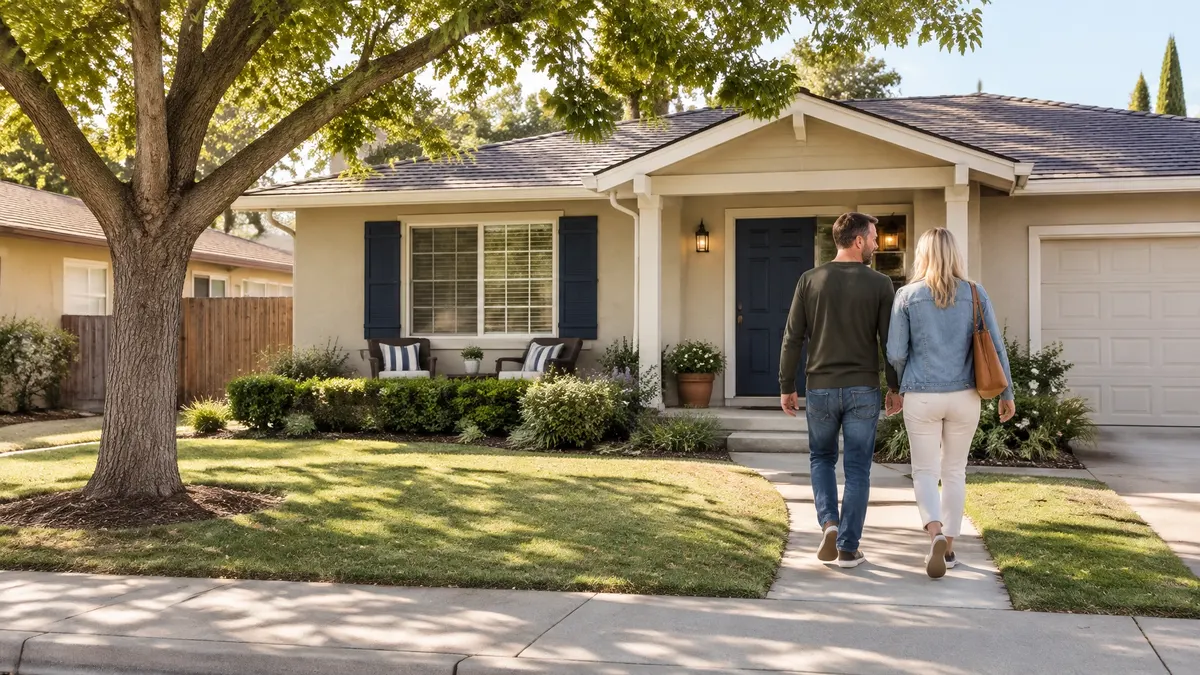
    A couple walking toward a modest single-story home in a Central Valley neighborhood

    FHA vs conventional loan: how do the main features compare?

    Feature FHA loan Conventional loan
    Minimum down payment 3.5% with a qualifying credit score of 580 or higher; typically 10% for scores from 500–579 under FHA guidelines. Lenders may set stricter requirements. As little as 3% for eligible buyers and programs. Not every borrower or property qualifies for the lowest down payment.
    Credit expectations Often more flexible for buyers with lower or limited credit. Approval still depends on the full application and lender requirements. Varies by program and lender. Credit score, debts, down payment, and other factors affect eligibility and PMI cost.
    Mortgage insurance Usually includes an upfront MIP charge and ongoing MIP. With less than 10% down, annual MIP generally lasts for the life of the loan. PMI generally applies with less than 20% down. You can usually request cancellation at 20% equity; it generally ends automatically when the balance reaches 78% of the home’s original value, subject to requirements.
    Loan limits County-specific. For 2026, the FHA one-unit limit in Stanislaus County is $545,100 in base loan amount. Subject to conforming loan limits and program rules, which differ from FHA limits.
    Property standards Requires an FHA appraisal, including a review of minimum property requirements for safety, soundness, and security. It is not a home inspection. Typically requires an appraisal too. Repair requirements depend on the property’s condition and lender rules.
    Seller contributions Seller contributions may cover eligible closing costs, generally up to 6% of the sale price, but not your required minimum down payment. Limits depend on occupancy and down payment. For a primary residence with more than 90% loan-to-value, seller contributions are generally capped at 3%; other tiers may allow more.

    You can review Fannie Mae’s overview of PMI and HUD’s FHA Single Family Housing Policy Handbook. For the FHA limit, check HUD’s 2026 loan limit information.

    Which one is better for you?

    A few useful starting points:

    – If your credit is around 620–680 and your down payment is small: Ask for both comparisons. FHA may be easier to qualify for, but its mortgage insurance can make the long-term cost higher.

    – If your credit is stronger: Conventional may offer a better overall cost, depending on your PMI quote and loan terms.

    – If you expect to keep the loan for many years: Consider when conventional PMI could end, compared with FHA MIP that may continue for the life of a low-down-payment loan.

    – If you may move or refinance sooner: Compare the costs over the years you expect to keep the loan, not only the lifetime totals.

    In the Central Valley, home prices are often below coastal California levels. That can leave more buyers within conventional loan limits and eligible for low-down-payment options. Still, the best route comes down to your personal numbers and the property you’re buying.

    What could the difference look like on a $400,000 home?

    Here’s a simplified example to show how the costs are structured. It’s illustrative only, not a quote or approval, and it does not include interest, property taxes, homeowners insurance, or any homeowners association dues.

    – FHA at 3.5% down: $14,000 down, with a $386,000 base loan. An upfront MIP charge of 1.75% would be about $6,755; it may be paid upfront or financed into the loan. Ongoing MIP is an additional monthly cost. Using an illustrative annual MIP factor of 0.55%, it would be about $177 per month initially.

    – Conventional at 3% down: $12,000 down, with a $388,000 loan. PMI would add a monthly cost while required. The actual amount varies with factors such as credit score, loan-to-value ratio, and loan details; ask your lender to calculate it.

    The conventional option starts with $2,000 less down in this example, but its PMI amount and the FHA loan’s upfront and ongoing MIP affect the comparison. Ask for both options side by side with the same purchase price and assumptions.

    Homebuyers reviewing mortgage paperwork and a laptop together at a bright kitchen table

    Can down payment assistance help?

    Possibly. Eligible buyers may be able to combine down payment assistance with FHA or conventional financing, depending on the assistance program’s rules. Assistance can come with income, purchase-price, homebuyer-education, or other requirements, so it’s worth checking early.

    If you’re looking outside the main city areas, a USDA loan may also be worth exploring. Eligible properties and borrowers may qualify for a 0% down payment option; eligibility depends on the location and loan requirements.

    What happens to mortgage insurance later?

    With a conventional loan, you can generally request PMI cancellation when your balance reaches 80% of your home’s original value, subject to your servicer’s requirements. Automatic termination generally applies at 78% of the original value if the loan is current. Ask your servicer about the exact process.

    With an FHA loan that has less than 10% down, MIP generally lasts for the life of the loan. One possible exit is refinancing into a new loan, if you qualify and the new loan makes financial sense. Refinancing has costs and is not guaranteed to save money.

    How can I compare my options?

    Bring both loan types into the conversation before you make an offer. I’m Jesse Santana, Mortgage Loan Officer, NMLS #256630. I’ve served borrowers for more than 25 years, working with homebuyers across Modesto and the Central Valley.

    I can help you review FHA loan requirements, conventional loan requirements, and any applicable assistance options. A 5-minute pre-approval can give you an initial picture of your buying power; qualified borrowers may also be eligible for same-day approvals. Neither timeline guarantees approval.

    A family in their home using a smartphone together

    Frequently asked questions

    Is 3% down better than 3.5% down?

    Not automatically. On a $400,000 home, the difference is $2,000 upfront. But mortgage insurance, credit-based costs, and eligibility may make one loan less expensive overall.

    Does FHA always cost more than conventional?

    No. FHA may be competitive for some buyers, particularly when conventional PMI is costly or conventional eligibility is a challenge. Compare personalized estimates rather than relying on a general rule.

    Can I switch from FHA to conventional later?

    If you qualify, you may refinance from FHA to conventional. That could remove FHA MIP, but the new loan’s costs and terms matter. Compare the full refinance expenses before deciding.

    Where can I learn more about Jesse’s lending services?

    Call or text (209) 505-1821 to learn about available mortgage options and how to start a conversation.

    Next step

    Call or text me at (209) 505-1821 to compare both paths for your situation. I’m proud to serve Central Valley buyers and to have earned a 5.0-star rating across nearly 300 reviews.

    Educational information only; not financial, tax, or legal advice. Not all borrowers will be approved. Terms, eligibility, program availability, and costs vary. Loan limits and guidelines may change.

  • First Time Home Buyer in California: Your 2026 Guide to Buying With Little Down

    First Time Home Buyer in California: How to Buy With Little or No Money Down

    First-time homebuyer couple with keys on the porch of a modest Central Valley home

    Do you need 20% down to buy your first home in California? No. Many eligible buyers can put down 3% or less, and down payment assistance may help with some of that cost. Veterans and some buyers purchasing in eligible rural areas may even qualify for a 0% down loan.

    I’ll walk through the main options, explain how assistance can work, and share a simple first-time homebuyer plan for Turlock, Modesto, and the Central Valley.

    How much down payment does a first-time home buyer need?

    It depends on the loan program, not whether you’re a first-time buyer. Some conventional loans allow 3% down, FHA loans generally start at 3.5% down, and eligible borrowers may qualify for VA or USDA financing with no down payment.

    For example, on a $400,000 home, 3% down is $12,000 and 3.5% is $14,000. Those figures don’t include closing costs or prepaid expenses, and your actual amount depends on the loan, home, and approval terms. Assistance may help reduce the cash you need, but 0% down doesn’t always mean zero cash due at closing.

    First-time buyers reviewing homebuying information at a kitchen table

    Which low-down-payment loan options should I compare?

    Here’s a quick look at common programs. Minimum down payments are subject to eligibility, lender requirements, and other program rules.

    Loan type Minimum down payment Credit flexibility Mortgage insurance or fees May be a fit for
    FHA Usually 3.5% Flexible compared with many options; lender standards apply Upfront and ongoing mortgage insurance Buyers who want a low down payment and may benefit from FHA’s credit guidelines
    Conventional 3% down 3% Credit and other requirements vary by program and lender Private mortgage insurance (PMI) usually applies with less than 20% down Qualified buyers who want a conventional loan with a small down payment
    VA 0% for eligible borrowers Lender requirements apply; a Certificate of Eligibility is needed No monthly PMI in most cases; a VA funding fee may apply Eligible veterans, service members, and some surviving spouses
    USDA 0% for eligible borrowers and properties Lender requirements apply; income and property eligibility matter USDA guarantee fees may apply Buyers with qualifying income purchasing an eligible rural-area home

    A few details matter:

    – FHA: FHA loans generally allow a 3.5% minimum down payment for borrowers who meet the applicable credit and underwriting guidelines. FHA mortgage insurance is part of the cost. See HUD’s information on FHA loans.

    – Conventional: Some programs, including Fannie Mae HomeReady, allow a down payment as low as 3% for qualified buyers. Income and other eligibility rules may apply.

    – VA: The VA home loan program can offer eligible borrowers a path to buy without a down payment.

    – USDA: Some rural and semi-rural properties may qualify for USDA financing. Eligibility depends on the home’s exact address and household income. Check a property using the USDA eligibility map. Around the Central Valley, don’t assume a property qualifies just because it’s outside a city; check the address.

    Can down payment assistance in California help me buy?

    It may. California down payment assistance can come in different forms, including grants, deferred-payment loans, or forgivable loans. The rules and availability depend on the program, and some assistance must be repaid when you sell, refinance, or pay off the first mortgage.

    One statewide option to ask about is CalHFA’s MyHome Assistance Program. It can provide a deferred-payment subordinate loan for down payment and/or closing costs when paired with an eligible CalHFA first mortgage and arranged through an approved lender. “Deferred payment” means payments are postponed, not necessarily forgiven. Review the MyHome program handbook and confirm current terms before making plans around the funds.

    CalHFA also publishes county income limits. Local programs may be offered through a city or county, but funding and application windows can change. If you’re looking in Turlock, Modesto, or elsewhere in Stanislaus County, ask what local programs are open and whether the home and your household meet their requirements.

    I help buyers explore down payment assistance programs and compare them with the available mortgage options. We’ll look at the assistance amount, repayment terms, and how it changes your estimated cash to close, not just the headline number.

    A young family outside a modest Central Valley-style home

    What steps should I take to buy my first home?

    You don’t need to figure out every program before you begin. Start with a clear picture of your budget and financing options.

    1. Check your monthly budget. Think beyond the mortgage payment. Include property taxes, homeowners insurance, utilities, maintenance, and any association fees.

    2. Get pre-approved early. A 5-minute pre-approval can give you an initial picture of what may fit your finances. It isn’t a final loan approval, but it can help you shop with more confidence and identify questions to work through.

    3. Compare loan options. Ask about FHA, conventional 3% down, VA if you’re eligible, and USDA if the property might qualify. Also ask whether assistance could pair with the loan.

    4. Find a home and make an offer. Once you’ve chosen a home, your agent can help you prepare an offer and negotiate terms.

    5. Complete the loan and close. The lender verifies your financial information and the property. After the required steps are complete, you can sign closing documents and receive the keys.

    Family looking at a phone together in their home

    Do I need perfect credit or 20% down?

    No. Credit requirements depend on the loan and lender, and there may be options before your credit is “perfect.” A lender can help you understand where you stand and what steps could improve your choices.

    Is renting always cheaper than buying?

    Not always, but buying is not automatically the better financial choice for every person. Compare the full monthly cost of owning with rent, and consider how long you plan to stay, your savings, and the costs of maintaining a home.

    What if I can’t afford closing costs?

    Ask whether down payment assistance can cover eligible closing costs. In some transactions, seller concessions may also help with certain buyer costs, subject to negotiation and loan-program limits. They aren’t guaranteed, so include closing costs in your plan from the start.

    First-time home buyer California: common questions

    Can I buy a home with 3% down in California?

    Possibly. Qualified buyers may be eligible for a conventional mortgage with 3% down. Your lender can confirm the program requirements and whether assistance may be available.

    Can I buy with no money down?

    Some eligible buyers can use VA or USDA financing with no down payment. You may still need funds for closing costs, prepaid expenses, or other costs, unless eligible assistance or negotiated terms help cover them.

    Does FHA have a minimum credit score?

    FHA guidelines include credit-score requirements, and lenders may have additional standards. Your options depend on your overall application, so it’s worth asking a lender to review your situation rather than assuming you won’t qualify.

    Are there first-time home buyer programs in Turlock or Modesto?

    There may be state, county, or city assistance, but programs can have limited funding, specific eligibility rules, or application periods. Ask your lender about current options and check directly with the relevant local housing agency.

    Let’s talk about your next step

    I’m Jesse Santana. I bring more than 25 years of experience, and my reviews are rated 5.0 stars across nearly 300 reviews. Call or text (209) 505-1821 to talk through your options.

    Not all borrowers will be approved. Program terms, eligibility, and assistance availability vary.

  • HELOC vs Home Equity Loan: Which One Makes Sense for You?

    HELOC vs Home Equity Loan: Which One Makes Sense for You?

    A couple reviews kitchen renovation plans and paperwork at their kitchen table

    If you’ve built up equity in your home, you may be wondering whether a HELOC or a home equity loan is the better way to pay for renovations, consolidate debt, or cover a large expense. A home equity line of credit (HELOC) lets you draw money as needed, while a home equity loan gives you a one-time lump sum with scheduled payments. I’ll also explain how a cash-out refinance compares.

    How does a HELOC work?

    A HELOC is a revolving credit line secured by your home. You can borrow up to an approved limit, repay what you use, and, during the draw period, borrow again as needed. You generally pay interest on the amount you’ve borrowed, not the full credit limit.

    Many HELOCs have a variable interest rate, so the payment can change. After the draw period ends, you can no longer take out funds and must repay the balance. The timing and terms vary by lender, so ask when repayment begins and whether payments could rise.

    A HELOC may suit a project with costs spread over time. For example, if you’re renovating a home in Turlock in stages, you could draw funds as work progresses rather than taking the whole amount upfront.

    A homeowner and contractor discuss plans during a kitchen renovation

    How is a home equity loan different?

    A home equity loan gives you one lump sum, which you repay in installments. The rate is often fixed, making payments more predictable, though terms vary by loan.

    If you already have a mortgage, a HELOC or home equity loan is usually an additional loan secured by your home. That means another payment alongside your current mortgage. Both options put your home at risk if you can’t repay.

    HELOC vs home equity loan vs cash-out refinance: What’s the difference?

    A cash-out refinance replaces your current mortgage with a larger new mortgage. You receive some of the difference as cash after paying off the old loan and applicable costs. Unlike a HELOC or home equity loan, it changes your first mortgage.

    Feature HELOC Home equity loan Cash-out refinance
    Access to funds Draw from a credit line as needed, up to your limit Receive a one-time lump sum Receive cash when the new mortgage closes
    Payment structure Payments depend on the amount borrowed and loan terms; payments may change Scheduled payments on the lump sum One payment on the new, larger mortgage
    Interest rate type Often variable; terms vary Often fixed; terms vary May be fixed or adjustable
    May fit best when… Costs are ongoing or uncertain You know the amount you need Replacing your first mortgage also makes sense for your goals

    When might a HELOC make sense?

    A HELOC may be worth considering when you need flexible access to funds rather than one large payment. Examples include:

    • Renovations completed in phases
    • Tuition or other expenses that come due over time
    • A planned project where the final cost is uncertain
    • A reserve for future expenses, if you understand the fees and risks

    Pros: You can draw funds as needed, and repaid amounts may become available to borrow again during the draw period. You may also keep your existing first mortgage in place.

    Cons: A variable rate can make payments less predictable. Payments may increase when the draw period ends, and your available credit could be affected by changes in your finances or home value.

    A fintech HELOC can offer an online application that takes about five minutes, funds in as few as five days for eligible borrowers, and no in-person appraisal required. Timing and requirements depend on the application and loan. Call or text Jesse to explore the HELOC option.

    A homeowner uses a smartphone at home

    When might a home equity loan make sense?

    A home equity loan may fit when you know the amount you need and prefer a lump sum with a scheduled repayment plan. That could include a defined home improvement project or another one-time expense.

    Pros: You receive the funds upfront, and a fixed rate, when available, can make payments easier to plan for. Your existing first mortgage generally stays in place.

    Cons: You borrow the full amount at once, so interest may accrue on money you don’t need right away. You’ll also have a separate payment in addition to your current mortgage.

    When might a cash-out refinance make sense?

    A cash-out refinance may be worth comparing if you want to borrow against your equity and replacing your existing mortgage could also work in your favor. For instance, if the available new loan terms suit your goals, you might prefer one first-mortgage payment instead of keeping your current mortgage and adding a second loan.

    But look beyond the monthly payment. A refinance changes the rate and terms on your entire mortgage balance, not just the cash you take out. Compare closing costs, the new loan term, total repayment costs, and what happens to the rate on your existing mortgage. If you’re weighing a cash out refinance vs HELOC, consider discussing both options with a loan professional before deciding.

    What are typical home equity loan requirements?

    There isn’t one universal credit score or equity requirement for every lender. For a HELOC, home equity loan, or cash-out refinance, a lender will generally review:

    • Equity and loan-to-value: How much you owe compared with your home’s value. The lender may also consider other loans secured by the property.
    • Credit history: Your credit profile helps lenders assess how you’ve managed debt.
    • Debt-to-income ratio (DTI): Your monthly debt payments compared with your gross monthly income.
    • Income and ability to repay: Lenders typically verify income and other financial information.
    • Home value and property details: An appraisal or another valuation may be required, depending on the loan and lender. A HELOC that doesn’t require an in-person appraisal may still involve other valuation steps.

    The home is collateral for all three options. If you can’t make payments, you could risk foreclosure. Review the payment terms, fees, rate adjustments, and repayment period before borrowing.

    How should I choose between these options?

    Start with how and when you’ll need the money:

    1. Need money in stages or aren’t sure of the final cost? A HELOC may offer flexibility, but budget for possible rate and payment changes.
    2. Know the amount and want a lump sum? Compare home equity loans, including their payment schedule and total costs.
    3. Would replacing your first mortgage also support your plans? Compare a cash-out refinance with keeping your mortgage and adding a second loan.

    For general guidance, the Consumer Financial Protection Bureau explains the difference between HELOCs and home equity loans and offers more detail on how HELOC draw and repayment periods work.

    Frequently asked questions

    Is a HELOC the same as a second mortgage?

    A HELOC is often a second mortgage when you already have a first mortgage, but it works as a credit line rather than a one-time lump-sum loan. A home equity loan can also be a second mortgage.

    Is a HELOC’s rate always variable?

    No single rule applies to every product, but HELOCs commonly have variable rates. Ask how often the rate can change, how that could affect your payment, and whether a fixed-rate option is available.

    Does a cash-out refinance pay off my current mortgage?

    Yes. A cash-out refinance replaces your existing first mortgage with a new, larger mortgage. The cash you receive depends on the loan amount and the costs and balances paid at closing.

    Next step

    Jesse Santana is happy to help you compare the options based on your home, current mortgage, and plans. He brings more than 25 years of experience and a 5.0-star rating across about 298 reviews; call or text him directly at (209) 505-1821.

    Not all borrowers will be approved; restrictions apply. This information is general and isn’t a loan approval or a commitment to lend.

  • How Does a Reverse Mortgage Work? A Simple Guide for Homeowners 62+

    How Does a Reverse Mortgage Work? A Simple Guide for Homeowners 62+

    A retired couple relaxing together in the living room of their California home

    If you’re 62 or older and own a home, a reverse mortgage may let you turn some of your home equity into money without selling your home or making required monthly mortgage payments. You still own and live in the home, but the loan balance grows over time and generally must be repaid when you sell, move out, or pass away. You must also keep paying property taxes and homeowners insurance and maintain the home.

    For Turlock and Central Valley homeowners who are house-rich but need more cash flow, understanding how a reverse mortgage works, including its costs and responsibilities, is an important first step.

    How does a reverse mortgage work?

    A reverse mortgage is a loan secured by your home. The most common kind is the FHA-insured Home Equity Conversion Mortgage, or HECM. Instead of making regular principal-and-interest payments to a lender, eligible homeowners can receive loan proceeds based on factors such as their age, home value, interest rate, and existing mortgage balance.

    You keep the home’s title. The lender places a lien on the property, and interest and other loan charges are added to the amount owed. That means the balance usually increases over time, while the equity available to you or your heirs may decrease.

    There is generally no required monthly mortgage payment while you meet the loan’s obligations. That does not mean the home has no ongoing costs: you remain responsible for property taxes, homeowners insurance, maintenance, and any applicable HOA or other property charges. If you don’t meet these obligations, the loan could go into default.

    A reverse mortgage generally becomes due when the last borrower dies, sells the home, or no longer uses it as a primary residence. The borrower or estate typically repays the loan by selling the home, refinancing, or using other funds. FHA-insured HECMs are generally non-recourse, which means the borrower or estate typically won’t owe more than the home’s value when it is sold to repay the loan. Rules and deadlines apply, so heirs should contact the loan servicer promptly.

    For more detail, see the CFPB’s overview of reverse mortgages and its guide to when repayment is due.

    How can you receive reverse mortgage payments?

    Depending on the loan and its terms, proceeds may be available in a few ways:

    • Lump sum: Receive a single amount at closing. Availability and limits depend on the loan structure.
    • Monthly payments: Set up regular payments for a chosen period or, under some plans, for as long as you live in the home and meet the loan requirements.
    • Line of credit: Draw funds as needed, up to the amount available under the loan.
    • A combination: Some plans allow a mix of a line of credit and scheduled payments.

    A line of credit can appeal to homeowners who don’t need all the money at once. Under HECM program rules, the unused available credit may grow over time. This is not interest earned in a bank account, and you generally owe interest and applicable charges on funds you borrow, not on the unused credit. Ask a counselor and lender to explain how the specific plan works.

    A woman in her 70s talking through plans at home with her adult daughter

    Reverse mortgage requirements: a quick checklist

    For an FHA-insured HECM, you generally need to:

    • Be 62 or older. If more than one person is borrowing, age rules may depend on the youngest borrower.
    • Live in the home as your primary residence and meet the property eligibility rules.
    • Have enough home equity. Any existing mortgage or lien may need to be paid off, often using reverse mortgage proceeds.
    • Complete a financial assessment. The lender reviews your ability to keep up with property charges; some borrowers may need money set aside for future taxes or insurance.
    • Receive counseling from a HUD-approved reverse mortgage counselor before proceeding.

    The HUD HECM counseling certificate is part of the federal program. Counseling gives you a chance to review the loan, responsibilities, costs, and alternatives independently.

    Reverse mortgage pros and cons

    A reverse mortgage can be useful, but it isn’t right for everyone. Consider the full picture before deciding.

    Potential advantages

    • Access some of your home equity without selling or making required monthly mortgage payments.
    • Choose from payment options that may help with retirement expenses, healthcare costs, or an existing mortgage.
    • Keep ownership of the home as long as you meet the loan requirements.
    • FHA-insured HECMs generally include non-recourse protection, subject to program rules.

    Potential disadvantages

    • Interest and loan costs add to the balance, reducing the equity that may remain for you or your heirs.
    • You still have to pay property taxes, homeowners insurance, and maintenance costs.
    • Selling, moving out, or a borrower’s death can trigger repayment. A spouse who is not a borrower may have different protections, so ask how the loan would affect them.
    • Loan costs and the effect on benefits, taxes, and estate plans deserve careful review. Talk with a counselor and, where appropriate, a tax or legal professional.

    A homeowner couple outside their single-story Central Valley home

    Common reverse mortgage myths

    “The bank takes your home.” No. You retain title as the homeowner. The lender has a lien, and the loan becomes due under specific circumstances, such as selling or moving out. You must still meet the loan’s occupancy and property-charge obligations.

    “My family will automatically inherit a bill they can’t pay.” Not necessarily. Heirs generally have options that may include selling the home and using the proceeds to repay the loan, or paying off the balance to keep it, subject to the loan’s rules and deadlines. With an FHA-insured HECM, heirs generally are not personally responsible for a shortfall beyond the home’s value. They should contact the servicer quickly to understand their options.

    “It’s free money.” It’s borrowed money secured by your home. Interest and other charges are added to the balance, so it’s important to weigh today’s cash-flow needs against future equity.

    What are the alternatives?

    A HELOC lets you borrow against home equity, often as needed, but it typically requires monthly payments and approval based on your finances. For homeowners under 62, a fintech HELOC can offer an online application that takes about five minutes, with funds available in as few as five days for qualified borrowers. Terms, approval, and timing vary.

    A cash-out refinance replaces your current mortgage with a larger one and returns some equity as cash. It usually means taking on required monthly mortgage payments and new loan costs.

    Downsizing, selling your home and moving to a less expensive one, can free up equity without adding a loan, but it means leaving your current home and taking on moving costs.

    The right comparison depends on how long you expect to stay, how much money you need, and whether maintaining a monthly payment or preserving equity for heirs is a priority.

    Talk it through before making a decision

    A reverse mortgage is a significant decision, and it’s reasonable to ask questions before you commit. Jesse Santana has more than 25 years of mortgage experience and a 5.0-star rating across about 298 reviews. He serves homeowners in Turlock and the Central Valley and can help you understand the options and what to ask a HUD-approved counselor.

    Call or text Jesse directly at (209) 505-1821.

    Not all borrowers will be approved, and loan terms and eligibility requirements vary. This article is for general educational purposes only and is not financial, tax, or legal advice. Consider speaking with a HUD-approved counselor and qualified professionals before making a decision.

    Frequently asked questions

    Do you make monthly payments on a reverse mortgage?

    There are generally no required monthly principal-and-interest payments while you meet the loan obligations. You must continue paying property taxes, homeowners insurance, maintenance, and other applicable property charges.

    Can you lose your home with a reverse mortgage?

    You keep ownership, but the loan requires you to live in the home as your primary residence and meet your ongoing responsibilities. Failing to meet those requirements may put the loan in default and risk foreclosure.

    What happens to the home when the borrower dies?

    The loan generally becomes due after the last borrower dies. Heirs may be able to sell the home and repay the loan or pay it off to keep the home. They should contact the servicer promptly because deadlines and options apply.

    Is a reverse mortgage only for people who need money right away?

    No. Some homeowners choose a line of credit so they can access funds if needed later. Whether that approach makes sense depends on the loan terms, costs, and household’s needs.

  • Bank Statement Loans for Self-Employed Buyers

    Bank Statement Loans for Self-Employed Buyers

    A strong business can produce healthy cash flow while showing modest taxable income on a tax return. That is why searches for “bank statement loans self employed” often come from business owners who are ready to buy, but do not fit the standard W-2 mortgage box. If your deposits tell a more complete story than your tax returns, a bank statement loan may create a practical path forward.

    This is not a shortcut around underwriting. It is a different method of documenting income. The lender reviews eligible bank deposits, business structure, credit, assets, down payment, and the property itself to determine whether the payment makes sense. For self-employed buyers throughout Turlock, the Central Valley, and California, that distinction can be meaningful.

    What Are Bank Statement Loans for Self-Employed Borrowers?

    A bank statement loan is a non-QM mortgage designed for borrowers whose income is legitimate and consistent but not fully reflected on traditional tax documents. Rather than relying primarily on W-2s and tax returns, underwriting may use 12 or 24 months of personal or business bank statements to calculate qualifying income.

    This approach is often helpful for entrepreneurs who take valid business deductions. A contractor may write off equipment, fuel, insurance, and materials. A consultant may deduct software, travel, and a home office. Those deductions can reduce taxable income, which may be smart tax planning, but they can also limit borrowing power with a conventional loan.

    With a bank statement program, deposits are reviewed over time to identify recurring income and establish an average. The analysis is more detailed than adding up deposits and dividing by 12. Transfers between accounts, one-time deposits, refunds, and funds that are not income may be excluded. When business statements are used, an expense factor is typically applied unless documented expenses support a different calculation.

    Who May Benefit From a Bank Statement Loan?

    The best candidates are self-employed borrowers with stable operations, documented deposits, and a clear reason their tax returns understate their available income. That can include sole proprietors, partners, S-corporation owners, real estate professionals, independent contractors, physicians with private practices, and commission-based professionals.

    A bank statement loan may also be worth reviewing if you recently expanded a business, changed how you pay yourself, or have significant income fluctuations that a conventional underwriting formula does not capture well. A seasoned lender can compare several options before assuming this is the right fit. In some cases, a conventional, jumbo, FHA, or other program may offer better pricing or a lower down payment requirement.

    The key is consistency. Strong deposits over time, a stable or growing business, good credit, and reserves can make a meaningful difference in the available loan terms.

    How Income Is Calculated

    Personal bank statements can be relatively straightforward when business income is deposited into a personal account. Underwriters generally review the statement history, identify qualifying deposits, remove ineligible transactions, and establish a monthly income figure.

    Business bank statements require another layer of analysis. A business owner may deposit gross revenue before paying payroll, inventory, rent, professional fees, or other operating costs. Because gross deposits are not the same as personal income, underwriting applies an expense factor to account for those costs. Depending on the program and documentation, that factor may be a standard percentage or may be supported by a letter from a CPA or tax preparer.

    For example, a business with $30,000 in average monthly deposits does not automatically qualify as if the owner earns $30,000 a month. If an approved expense factor is 50%, the qualifying income may begin closer to $15,000 per month before the lender evaluates the rest of the file. The actual calculation depends on the program, business type, ownership structure, and documentation.

    Documents You Should Expect to Provide

    Bank statement loans are sometimes described as low-documentation loans. A more accurate description is alternative-documentation loans. You will still need to prove that your finances, identity, assets, and property meet program requirements.

    A prepared borrower should expect to provide items such as:

    • 12 or 24 months of personal or business bank statements
    • A business license, CPA letter, or other evidence of self-employment
    • Government-issued identification and authorization for credit review
    • Statements documenting funds for down payment, closing costs, and reserves
    • Property documents, insurance information, and appraisal-related materials

    Additional documentation may be needed based on the transaction. Borrowers using business statements may need to document ownership percentage and the nature of their business. Large deposits, declining revenue, recent overdrafts, or unusual account activity can prompt questions. Providing clear explanations early helps keep the review moving.

    Down Payments, Credit, and Property Type

    Requirements vary by lender and program, but bank statement loans commonly require a larger down payment than some conventional or government-backed options. Credit score, loan amount, occupancy, property type, and debt-to-income ratio all affect the down payment and pricing available to you.

    A borrower with excellent credit, substantial reserves, and a larger down payment may have more choices than a borrower who is financing a high loan amount with limited cash remaining after closing. Primary residences, second homes, and investment properties may each have different rules. Condominiums, multi-unit properties, and rural properties can also require additional review.

    California buyers should plan for more than the down payment. Closing costs, prepaid taxes and insurance, appraisal fees, and reserve requirements can affect the cash needed to close. A complete pre-approval conversation should account for the full picture, not just the purchase price.

    The Trade-Offs to Understand Before You Apply

    Bank statement financing can expand access to homeownership, but it is not automatically the lowest-cost mortgage. Rates and fees may be higher than those on conventional conforming loans because the income documentation is less standardized and the loan is generally non-QM. The difference can be modest in one scenario and more significant in another.

    There can also be stricter requirements for credit history, reserves, down payment, and recent housing payment history. Some programs may allow features that conventional financing does not, while others may impose prepayment provisions or other terms that require careful review. Ask for a clear explanation of the rate, annual percentage rate, monthly payment, cash to close, and any applicable prepayment terms before selecting a loan.

    The right question is not simply, “Can I qualify?” It is, “Does this loan support my financial goals at a payment and cost I am comfortable carrying?” For some buyers, a bank statement loan is the right long-term financing solution. For others, it may be a bridge until a future refinance into a conventional loan makes sense. Future refinancing is never guaranteed, so the initial loan should stand on its own.

    How to Prepare for a Faster Review

    Keep personal and business accounts organized. Avoid mixing personal transfers with business revenue when possible, and maintain clean records for large or irregular deposits. If your income is seasonal, be ready to explain the cycle and show the broader pattern of business performance.

    It also helps to avoid major credit changes before closing. Do not open new accounts, finance equipment, move large sums without documentation, or make large purchases on credit without discussing the impact first. A pre-approval is based on information available at that time, and underwriting will verify key details before final approval.

    Working with an experienced mortgage professional can reduce unnecessary back-and-forth by identifying the best statement period, calculating income conservatively upfront, and comparing bank statement financing with other available programs. At Rate, Jesse Santana helps borrowers evaluate the details early so the financing strategy supports the home search instead of slowing it down.

    Your business may not fit a standard payroll template, but that does not mean your home financing needs are out of reach. Start with organized statements, honest documentation, and a conversation focused on the full financial story behind your deposits.