FHA vs Conventional Loans for Central Valley Buyers: Which Costs Less for You?


Serving Modesto and the Central Valley · (209) 505-1821
FHA loans generally allow 3.5% down and have flexible credit guidelines, but they include upfront and ongoing mortgage insurance. Eligible conventional loans can require as little as 3% down, and private mortgage insurance (PMI) can often be removed later. Which costs less depends on your credit, down payment, and how long you keep the loan.
If you’re buying in Modesto, Turlock, or elsewhere in Stanislaus County, the best comparison is not just “3% versus 3.5% down.” It’s the full monthly payment and the insurance costs over time. Here’s how I help buyers weigh both options.
What’s the difference between FHA and conventional loans?
An FHA loan is insured by the Federal Housing Administration. That backing can make qualification more flexible, but FHA loans charge mortgage insurance premiums (MIP).
A conventional loan is not insured by the federal government. Eligible buyers may put down as little as 3%, though eligibility rules vary. If you put down less than 20%, you’ll generally pay PMI. Unlike FHA MIP in many low-down-payment cases, conventional PMI can usually be canceled once you build enough equity.
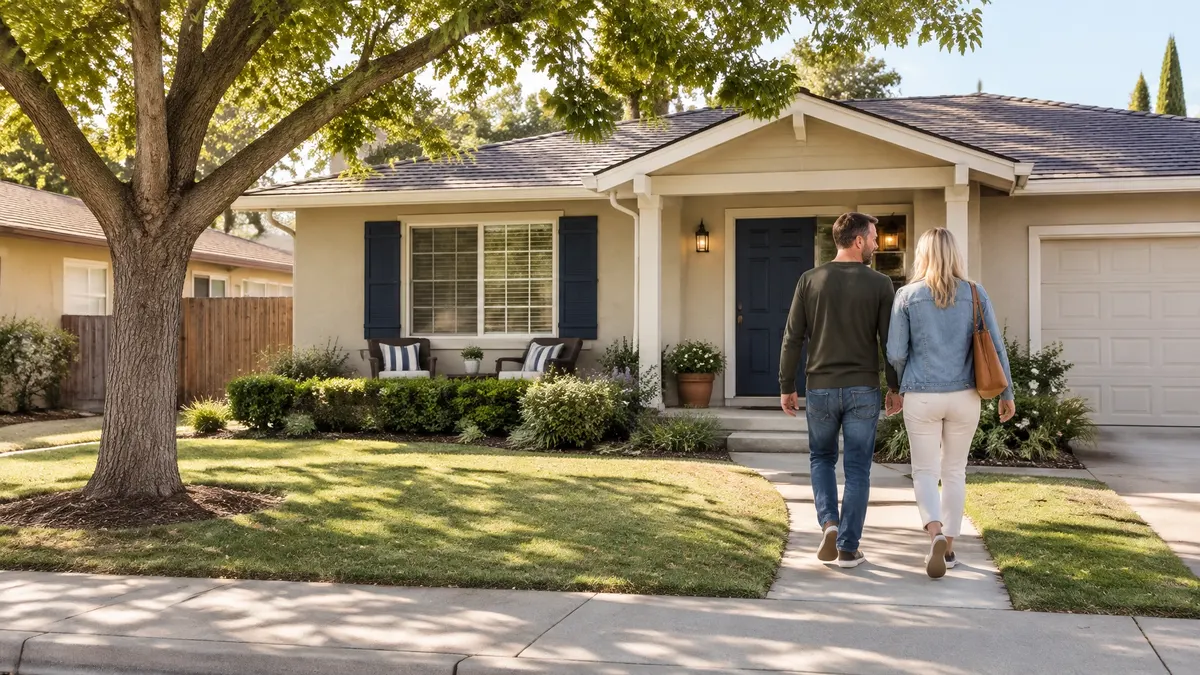
FHA vs conventional loan: how do the main features compare?
| Feature | FHA loan | Conventional loan |
|---|---|---|
| Minimum down payment | 3.5% with a qualifying credit score of 580 or higher; typically 10% for scores from 500–579 under FHA guidelines. Lenders may set stricter requirements. | As little as 3% for eligible buyers and programs. Not every borrower or property qualifies for the lowest down payment. |
| Credit expectations | Often more flexible for buyers with lower or limited credit. Approval still depends on the full application and lender requirements. | Varies by program and lender. Credit score, debts, down payment, and other factors affect eligibility and PMI cost. |
| Mortgage insurance | Usually includes an upfront MIP charge and ongoing MIP. With less than 10% down, annual MIP generally lasts for the life of the loan. | PMI generally applies with less than 20% down. You can usually request cancellation at 20% equity; it generally ends automatically when the balance reaches 78% of the home’s original value, subject to requirements. |
| Loan limits | County-specific. For 2026, the FHA one-unit limit in Stanislaus County is $545,100 in base loan amount. | Subject to conforming loan limits and program rules, which differ from FHA limits. |
| Property standards | Requires an FHA appraisal, including a review of minimum property requirements for safety, soundness, and security. It is not a home inspection. | Typically requires an appraisal too. Repair requirements depend on the property’s condition and lender rules. |
| Seller contributions | Seller contributions may cover eligible closing costs, generally up to 6% of the sale price, but not your required minimum down payment. | Limits depend on occupancy and down payment. For a primary residence with more than 90% loan-to-value, seller contributions are generally capped at 3%; other tiers may allow more. |
You can review Fannie Mae’s overview of PMI and HUD’s FHA Single Family Housing Policy Handbook. For the FHA limit, check HUD’s 2026 loan limit information.
Which one is better for you?
A few useful starting points:
– If your credit is around 620–680 and your down payment is small: Ask for both comparisons. FHA may be easier to qualify for, but its mortgage insurance can make the long-term cost higher.
– If your credit is stronger: Conventional may offer a better overall cost, depending on your PMI quote and loan terms.
– If you expect to keep the loan for many years: Consider when conventional PMI could end, compared with FHA MIP that may continue for the life of a low-down-payment loan.
– If you may move or refinance sooner: Compare the costs over the years you expect to keep the loan, not only the lifetime totals.
In the Central Valley, home prices are often below coastal California levels. That can leave more buyers within conventional loan limits and eligible for low-down-payment options. Still, the best route comes down to your personal numbers and the property you’re buying.
What could the difference look like on a $400,000 home?
Here’s a simplified example to show how the costs are structured. It’s illustrative only, not a quote or approval, and it does not include interest, property taxes, homeowners insurance, or any homeowners association dues.
– FHA at 3.5% down: $14,000 down, with a $386,000 base loan. An upfront MIP charge of 1.75% would be about $6,755; it may be paid upfront or financed into the loan. Ongoing MIP is an additional monthly cost. Using an illustrative annual MIP factor of 0.55%, it would be about $177 per month initially.
– Conventional at 3% down: $12,000 down, with a $388,000 loan. PMI would add a monthly cost while required. The actual amount varies with factors such as credit score, loan-to-value ratio, and loan details; ask your lender to calculate it.
The conventional option starts with $2,000 less down in this example, but its PMI amount and the FHA loan’s upfront and ongoing MIP affect the comparison. Ask for both options side by side with the same purchase price and assumptions.

Can down payment assistance help?
Possibly. Eligible buyers may be able to combine down payment assistance with FHA or conventional financing, depending on the assistance program’s rules. Assistance can come with income, purchase-price, homebuyer-education, or other requirements, so it’s worth checking early.
If you’re looking outside the main city areas, a USDA loan may also be worth exploring. Eligible properties and borrowers may qualify for a 0% down payment option; eligibility depends on the location and loan requirements.
What happens to mortgage insurance later?
With a conventional loan, you can generally request PMI cancellation when your balance reaches 80% of your home’s original value, subject to your servicer’s requirements. Automatic termination generally applies at 78% of the original value if the loan is current. Ask your servicer about the exact process.
With an FHA loan that has less than 10% down, MIP generally lasts for the life of the loan. One possible exit is refinancing into a new loan, if you qualify and the new loan makes financial sense. Refinancing has costs and is not guaranteed to save money.
How can I compare my options?
Bring both loan types into the conversation before you make an offer. I’m Jesse Santana, Mortgage Loan Officer, NMLS #256630. I’ve served borrowers for more than 25 years, working with homebuyers across Modesto and the Central Valley.
I can help you review FHA loan requirements, conventional loan requirements, and any applicable assistance options. A 5-minute pre-approval can give you an initial picture of your buying power; qualified borrowers may also be eligible for same-day approvals. Neither timeline guarantees approval.

Frequently asked questions
Is 3% down better than 3.5% down?
Not automatically. On a $400,000 home, the difference is $2,000 upfront. But mortgage insurance, credit-based costs, and eligibility may make one loan less expensive overall.
Does FHA always cost more than conventional?
No. FHA may be competitive for some buyers, particularly when conventional PMI is costly or conventional eligibility is a challenge. Compare personalized estimates rather than relying on a general rule.
Can I switch from FHA to conventional later?
If you qualify, you may refinance from FHA to conventional. That could remove FHA MIP, but the new loan’s costs and terms matter. Compare the full refinance expenses before deciding.
Where can I learn more about Jesse’s lending services?
Call or text (209) 505-1821 to learn about available mortgage options and how to start a conversation.
Next step
Call or text me at (209) 505-1821 to compare both paths for your situation. I’m proud to serve Central Valley buyers and to have earned a 5.0-star rating across nearly 300 reviews.
Educational information only; not financial, tax, or legal advice. Not all borrowers will be approved. Terms, eligibility, program availability, and costs vary. Loan limits and guidelines may change.
Leave a Reply